

Pogo, a 10-year-old Beagle, was presented to our hospital with weakness in his hind limbs and increasing difficulty walking. Beagles are among the breeds predisposed to Intervertebral Disc Disease (IVDD), a condition in which the discs between the vertebrae degenerate and can protrude into the spinal canal, causing spinal cord compression. Having previously undergone spinal surgery for the same, Pogo's parents were familiar with the signs of spinal disease and sought veterinary care without delay.
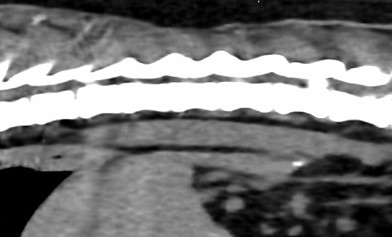
A thorough neurological examination was performed, followed by a CT scan, which revealed a marked L1–L2 disc extrusion causing severe compression of the spinal cord. The advanced imaging provided a clear picture of the location and severity of the lesion, allowing the surgical team to make a prompt and accurate treatment plan.
Recognizing the urgency of the condition, Pogo's parents immediately consented to surgery. The compressed spinal cord was successfully decompressed, relieving the pressure that was causing his neurological deficits. Over the following weeks, Pogo steadily regained strength and mobility in his hind limbs.
Today, Pogo is doing well and enjoying a comfortable, active life with his family once again.
Breeds such as Beagles, Dachshunds, French Bulldogs, and Cocker Spaniels are at increased risk of IVDD. Early recognition of signs such as back pain, hind limb weakness, wobbliness, or difficulty walking is crucial. Pogo's case highlights the value of modern diagnostic tools for accurate diagnosis and demonstrates how timely surgical intervention, combined with parents’ commitment and post-operative care, can lead to an excellent recovery.

